“Sexy” by Jhumpa Lahiri

“Sexy” is a short story written by Jhumpa Lahiri in 1998. It is about a woman, Miranda, who lives in Boston and begins an affair with a married Indian man named Dev. All the while, Miranda’s best friend, Laxmi, is telling her of the way her cousin’s husband has begun an affair with a women from London. Miranda’s infatuation with the man, in part, revolves around the way that she finds Dev to be absolutely beautiful, and he, in turn, tells her that she is sexy, something no one had ever told her before. When Laxmi’s cousin’s son also calls Miranda beautiful, explaining it to mean “loving somone you don’t know,” Miranda has a revalation about her relationship with Dev and her attraction to Indian culture. She finds that, while she finds the culture beautiful and alluring, she is ruining Dev’s wife’s life and future by being involved with him. Slowly, the two dissolve the relationship with distance.

Lahiri’s story, specifically Miranda’s attraction to Dev and is culture, can be seen in many of the works we’ve looked into this semester. In particular, I am reminded of the way Marlow became fascinated by the river in Africa Joseph Conrad’s Heart of Darkness. Both story seem to include the way we are intrigued and attracted to that which is foreign to us. The stories both also seem to have some negative connotations for what happens when we become to involved with these cultures. It is perfectly acceptable for Miranda to be interested Dev and his culture. By Rohin, the cousin’s son’s, lexicon, we can say that Miranda finds it “sexy;” she has fallen in love with it even though it is not her own. However, try as she may, it is not hers. She can admire it, but by staying with Dev, she begins to ruin it, just as she would ruin Dev’s family. In both Miranda’s relationship and the cousins, the women in the affair are both Western, Miranda being from America and the other mistress from London. They are outsiders to the culture that the men know. The culture fascination goes both ways, and in both cases contains the abiltity to destroy.

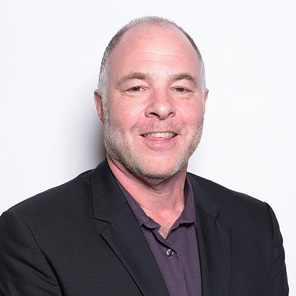
On “Guilty Pleasures” by Jackson Katz

In Jackson Katz’s essay “Guilty Pleasures: Pornography, Prostitution, and Stripping” (Chapter 10 of the linked book) from 2006, the title explains it all. Well, sort of. Katz goes in detail to explain the view of pornography from the feminist perspective, including both the view of the feminists that are for or adamantly against the porn industry and its representation of women. Part of the problem with this conversation, is that it has “largely taken place among women” (185). There is much less male representation in the argument about the ethics of porn. Katz weighs in on the way that porn only adds to the normalization of sexual violence. Among the most famous pornographic films are those that actively show images of women, not only in submission to dominant and violent men, but in physical pain and discomfort at what is happening to them. The fact that these videos are popularized give men the notion that it’s okay and that they should want to put women in this kind of position. 

Unfortunately for Katz, I am just another woman adding to this conversation, but I understand what he’s saying. Rather than discuss how I see it in the world (because, in truth, that makes me vaguely uncomfortable to throw in my own experience), I’ll discuss the ways in which I hear it. I am a 21 year old woman in a sorority. On the regular, I’m in a position where I am around men, particularly ones who are in a fraternity. Having become friends with many of them, even dating one, it’s rather appalling to hear the way that men talk about women. I was put into a position where I was around this group of guys on the regular. There isn’t much that they just didn’t  discuss in front of me, or group chat conversations that I didn’t read. The way that they talk about women is quite appalling. Reading Katz’s article makes that make a bit more sense. That’s not to say that it’s okay or that I assume all men are like this. It just means that, from my experience, there seems to be this culture around sex where men appear like they have to be dominant, and that to do this, sex becomes relatively violent.

Lahiri Interview

The interview with Jhumpa Lahiri comes following the debut of her first novel The Namesake. It focuses much on her influences as a writer, particularly when it comes to her Indian heritage. It poses questions such as how much of her work was driven from experience and how this first novel will hold up to her previous Pulitzer-winning collection of short stories. 

Part of the interview that struck me a lot is when the interviewer asks Lahiri about the way that she sees herself when it comes to her heritage and nationality. Lahiri explains the way that she doesn’t really view herself as Indian or American. This self image shifts depending on where she is or whom she is with, but overall, she feels as though she doesn’t fit into either box. This is just very interesting to me, especially as she is asked if she feels like an immigrant, and Lahiri answers no, but she understands what that’s like watching her parents. 

Similarly, when she shares that she was born an Indian citizen, which is interesting as she was born in England and had never actually been to India at the time. She shares that being born a citizen of England may have been better for her because it would have given her this middle ground between American and Indian. 

Lahiri also relates the way that the harshest reviews that she received came from the Indian population. She was told on several occasions that she did have “claim” to write about India which is incredibly hurtful considering the fact that she is Indian, her parents came from there, and she visits the country quite often. This definitely solidified that idea that Lahiri doesn’t feel she has a place. The very country she had been writing about, in part, rejected her.

Jhumpa Lahiri

Pulitzer Prize-winner Jhumpa Lahiri is the author of The Namesake and Interpreter of Maladies.

Jhumpa Lahiri was born July 11, 1967 in London, England, but from the age of three, lived in Rhode Island in the United States. Lahiri grew up a more introverted child, turning to books and writing in elementary school as an outlet. She felt like an outsider in the United States because of her strong Indian roots, and the way her immigrant parents had raised her on those values. When Lahiri went on to become a writer years after college, this would become a strong influence in her works. 

Jhumpa Lahiri attended Barnard University in order to achieve her Bachelor’s degree in English literature. She went on to Master’s in English, Creative Writing, and Comparative Studies in Literature and the Arts, as well as her PhD in Renaissance studies, all from Boston University.

Lahiri began to focus on a career as a writer in the later 1990s, focusing on writing her first collection of short stories that would publish in 1999, entitled Interpreter of Maladies. This collection would win her the Pulitzer Prize for fiction in 2000, launching the author’s name into recognition, and paving her path for future success in writing. 

** Lahiri has no website and no active Twitter page that I have been able to find**

“Jhumpa Lahiri.” Newsmakers, Gale, 2001. Gale In Context: Biography, https://link.gale.com/apps/doc/K1618003187/BIC?u=kutztownuniv&sid=BIC&xid=a0edf5e1. Accessed 10 Mar. 2020.

“Violence Against Women – it’s a Men’s Issue”

Jackson Katz –  “Violence Against Women – it’s a Men’s Issue”

Jackson Katz begins his TED Talk by explaining the way that we as a society have begun taking men out of the conversation about sexual and domestic abuse. In turn, we focus on the victim, women, and what they are doing to be placed in scenarios where they are abused, instead of focusing on men and what we should be doing to stop the abuse altogether. Katz does an exercise where he rewrote the sentence “John beat Mary” until it eventually became “Mary is a battered woman” to showcase the way that we take the abuser, the man, out of even the way we talk about abuse. We pull the blame away from them as though the problem isn’t the way our culture brings up men to think that it’s okay. Katz believes that we have to not only bring the subject of men back into the conversation, but get them involved. He asks then men begin taking an active stance against the way that men overly sexualize and talk against women and each other. In order to create change, men need to use their natural pedestal in order to draw attention to these issues. Nothing is going to change until men are standing up to other men because the things that we’ve been allowing as a society like sexual and domestic abuse are not okay.

As a woman in today’s society, I don’t think I necessarily learned anything incredibly new during Katz’s lecture. These are all things that I’m aware of because I witness first hand the way a patriarchal society looks down on women who try to stand up for other women. Katz addresses the way that these women are called “man-haters” and “femi-nazis” when they try to speak out against men. This is why he wants men to start making a difference. It’s a shame that I’m almost afraid to define myself using the word feminist because I don’t want people to immediately think I hate all men because of it. We need to stop focusing on how sexual and domestic abuse is the victim’s problem instead of calling attention to the way we raise men to think that they can do those types of things. It’s 2020. The problem should never be that a girl’s skirt was too short or that she put herself in that situation by going to a party or a frat house or by drinking. Everything still could have been avoided if we taught men that it’s not okay to use and abuse women. Every woman is someone’s daughter or sister or friend. I don’t understand how we’re still able to make excuses for this.

Jackson Katz

Jackson Katz was born May 7, 1960 in Swampscott, Maryland. Katz is currently married to his wife, Shelley, and has a son named Judah. He is an activist in masculine studies, specifically focusing on the way that norms have focused on creating a culture of “misogyny, homophobia, and violence” (182). Prior, Kats studied at UMass Amherst, Harvard, and the University of California.

Katz works as an educator for men at all ages, as well as with the military and sports teams in order to help change the stigma. He has also made films, such as Tough Guise and Tough Guise 2. Katz has also written The Macho Paradox: Why Some Men Hurt Women and How All Men Can Help and Men Speak Out: Views on Gender, Sex and Power, as well as other pieces about the way politics intersect with masculinity and toxic masculinity.

He is also founded Mentors in Violence Prevention Strategies, a program he is also actively a director of. This program works on awareness and training for men still in school, as well as the military, professional sports teams, and major corporations in order to try to alleviate toxic masculinity and provide a better example for younger generations. 

To contact Jackson Katz or to do further research, check out the links below to his media platforms.

Twitter

Website

Facebook


“Jackson Katz.” Gale Literature: Contemporary Authors, Gale, 2018. Gale In Context: Biography, https://link.gale.com/apps/doc/H1000186203/BIC?u=kutztownuniv&sid=BIC&xid=6aed5e9b. Accessed 5 Mar. 2020.

Image taken from Katz’s website

Something Something Linguistics

Being in a Linguistics class this semester has really left me with language on the brain, folks.

Today, it just so happened to come up in my readings. Paul Kei Matsuda and Matthew J. Hammill’s essay “Second Language Writing Pedagogy” discusses the way second language learners can struggle in English classrooms in terms of writing. In particular, I took note of the way that we can’t assume that all English learners are on the same level when it comes to their reading, writing, and speaking skills. To pull a block quote:

“Some students who cannot communicate well face-to-face may be able to produce texts that seem much more advanced; the discrepancy between students’ spoken and written performance, therefore, is not necessarily an indication that the student has plagarized.” 

They also state that the opposite would be true for students who speak like a native English speaker, but struggle with the grammar and conventions involved in writing. 

The piece also continues on to state the way that speakers of different dialects of English like African American English or Appalachian English may also struggle with similar surface issues in writing because of the way their dialect dictates their speech. 

It was here that I paused my reading and thought, “Oh my gosh I actually recognize those dialects and what they mean! So THAT’S why I have to take this class that I thought I’d never use again in my life.”

So anyway, what am I getting at?

Oh right. Basically, I got to thinking about the way that we have all of these students with different dialects and who are at different levels of proficiency when it comes to English, but so often we choose to evaluate them all the same way. I’m not saying all teachers do this, but I have witnessed classrooms that are less understanding of the way that students are always learning how to navigate the English language. That’s why they’re in our classes. 

So what can we do to help this?

Well, for starters, and this goes for all high school writing classes in my opinion, we should be grading students on how they improve and not necessarily just how they are writing at a certain time. Did that make sense? Okay, to explain, I feel that, as educators, our goal is to see students improve at the skills they are working on. Instead of simply failing students because they do not write the way we think they should be able to at one point in time, we should be looking at how they write when they first enter the classroom, and push them to improve and grow as writers. This means have them turn in drafts so that we can help them get to where they need to be. We should allow resubmissions so that students are not discuouraged by a bad grade and give up. 

This is so important for language learners because they’ve got a task that’s even harder. They could think about a paper or topic in one language and be writing it in another. We need to be generous and patient with these students because the writing process becomes so much longer for them. 

My next assertion comes from the block quote I mentioned earlier. Students should be able to do projects in different forms of media because one form may not highlight their actual capabilities. If a student excels more at speaking than writing, it could be incredibly beneficial for them to write a draft, but then do the final project as a podcast when they can hear themselves and correct their grammar. 

I’ve been in a couple schools now in my college experience where I’ve worked with English Language Learners. I feel like when we limit their options for assignments or grades, we’re limiting their ability to succeed. I never really understood why I could never resubmit a paper or make a film instead of an essay.

Sorry for the rant. I guess I’d just like to see that change because it would benefit more than just the language learners. 

You had Me at Research (Please Drop the Paper)

Hold on folks, I found yet ANOTHER blurb today while reading that made me feel incredibly guilty.

So. I feel pretty confident in saying that none of us probably wrote like experts in high school, especially when doing research projects. I mean I can at least speak for myself and say that I was a last minute procrastinator to the absolute MAX. I could bullshit a paper, get an A, and tell myself it was probably the best I could do anyway (not true btw). 

Upon reading A Guide to Composition Pedagogies, more specifically Rebecca Moore Howard and Sandra Jamieson’s piece “Researched Writing,” I found this quote about first-year writing students at university:

“Those students do not seem to be engaging with the entire text, and they frequently simplify or partially misrepresent the source to make it fit their arguments.”

Basically, this was stating that one of the current problems with teaching research writing, is that students still do not know how to properly engage a text, and are more likely to pull out one quote that sounds like something that would fit their argument regardless of the context.*

*’Scuse me while I tangent and explain so that I feel like I wasn’t being a filthy hypocrite and doing exactly what they said to avoid.

If I’m going to be flat out honest, I feel like I remember one of my high school teachers basically telling me to do this at some point. I’d like to think I’m wrong, but I remember her telling me, “You just need one quote that fits your thesis.”

Thank God I outgrew this habit in college, but other people aren’t that lucky and still don’t know, so it’s important we start reteaching our students about how to properly work research into our writing. 

Personally, I’m not sure I know how to do this, so thankfully, Howard and Jamieson have some tips on how to do this, and the best advice that they give, is to focus less on the research paper, and to focus more on teaching students the process of research.

Thankfully, this doesn’t mean hours in the library having a librarian show you how to navigate your different browser and database options, because, thanks, students do know how to do that already. We’ve all had to sit through those lectures at least 5 times.**

**Note: sometimes students really do need this though. Please just take an anonymous poll of the room first.

My favorite method that is discussed that specifically approaches fixing the way students only skim-read articles, is just doing lessons that teach “engaged and critical reading.” Basically, we need to start focusing on teaching students that it’s important to read and understand the whole of what an author is saying. So, instead of a research paper, assess and help their ability to simply read and review research.

Truthfully, when you’re doing this correctly, it’s a lot of work. Having students read and review research, plus finding an effective way to sum it up truly a whole project and lesson on it’s own. 

High school educators, in particular, need to take a step back and help students along the journey of doing proper research before we start to focus on the writing portion. We’re all just trying to help our students become better writers. Sometimes we just need to curb our enthusiasm and take a step back to remember our students are not masters and need to know the basics first. 

There is an Alternative to Essays You Know.

So, it’s time we have a serious talk that is honestly a little sad for me to admit. 

*deep breath*

Okay, so, even in the day and age that I have grown up in, I’m still incredibly bad at working technology and digital media into the classroom.

There I said it.

“Well, good for you. At least there’s tons of articles and information out there to help you better integrate it.”

Yes, but that still doesn’t take away from the immense shame that I feel at being bad at using tech regardless. I think growing up in my era has made that transition harder, actually. At least for me.

Referring back to my last post, I just feel like my teachers personally were quite out of date in the tech and advocacy that they had us focus on. With that in mind, I feel like I’m afraid that I would be pushing something similar onto my students where they have a hard time staying interested because it’s not relevant enough.

On  the brightside, I did find an article with an assignment that uses tech for student advocacy that I really enjoyed.

Lauren King and Kristen Hawley Turner’s essay “Access, Readiness, and the Ethical Imperative of Advocacy” discussed the way in which using being able to teach technology and advocacy, especially in a Title I school can be difficult. Title I schools tend to lack the shared digital resources that make these types of assignments conducive, but it’s so important for students to learn how to advocate for themselves and find their voice, so we really have to work around it. 

King and Turner talk about a project where students looked at a real world issue in their community, and studied Public Service Announcements so that they could make their own about something that’s important to them.

I really fell in love with this idea as soon as I heard it for so many reasons

  1. Students are encouraged to talk about the difficult issues that they are facing in their lives right now and raise awareness about them. They are getting their voices heard which is awesome.
  2. The teacher didn’t just make it a persuasive essay assignment! This is amazing because as much as I enjoyed writing those, who was EVER going to read them? I never understood why I was getting so passionate about an issue that I was never actually doing anything about.
  3. The use of a video is probably so much more relevant and easier on students to work on their literacy skills. It takes away from the scary essay format, and it allows them to explain their ideas and thoughts in a normal, nonacademic way. You never know what I student will say if they don’t have to put it in size 12 Times New Roman, double spaced font. Seriously, so many more of the students in the essay succeeded because this assignment wasn’t just a normal essay. 

Honestly, one of the things I’m most excited about as an English teacher is to move away from the idea that every assignment HAS to be an analysis of literature or a research paper. Video projects and websites and presentations can help students improve their literacy as well. They are just as important. And the odds are, if given a choice, your students are going to be more interested in what they are doing and they’re going to do better on it. Especially when we’re covering these subjects like advocacy. Why are we only having them share their research and opinions with us, the teacher? What good is that doing? It’s time we encourage and help our students to be heard.

Please Try Harder than Using Facebook in the Classroom.

Raise your hand if you were ever a victim of a high school teacher telling you to write a blog post or a Facebook page that was in all actuality completely pointless and you didn’t know what you were doing anyway.

Honestly, these were the worst assignments when I was at school for several reasons. 

  1. No one who’s not currently a parent REALLY uses Facebook. Why does no one seem to notice this? Why do teachers still find Facebook relevant for highschool kids? It’s not. There’s seriously so many other, better options if you want to use social media. Move on.
  2. I was 16, what exactly did you want me to get out of making a blog? I had no idea what I was doing, nor did anybody else. If I ever had to make a website, I would just vomit up my textbook onto that platform instead of a Word doc.* Then I would even get praised because “you all just use the Internet so well!” Awesome, I knew that already. I was raised on it, but why the hell are we making a blog? Who’s going to see it? The answer, my teacher and no one else, so why did I have to do it?

*The exception being my creative writing websites from those high school classes. Yes they’re still out there. No, you should not look for them.

Now, why is this relevant again? Well, because I finally read an article about the way we SHOULD be teaching students to use technology and digital media as opposed to the way we have been. 

In her article “Digital Skills and Digital Literacy: Knowing the Difference and Teaching Both,” Maha Bali explains, well, exactly what the title says. Bali describes digital skills to be focusing on “which tool to use and how to use it.” Which has exemplified my experience of, “Here’s where you make a blog. Now make a blog.” Digital literacy focuses on answering basically every other question: why are we using this platform, when would you be using this platform, who is our audience, and who is involved? 

This literacy could be so beneficial especially in this day and age of having technology and media all around us. Part of teaching digital literacy  includes teaching students about how the internet collects everything that they post.** Our digital footprint is huge nowadays and I wish I’d have had someone remind me that every platform had privacy settings so that the rest of the world didn’t have access to my entire life.

**Granted, Bali used Facebook privacy settings as the default. This is a few years old, but really, pay attention to what forms of digital media your students are using and stay relevant to them. I’m in college and I only touch Facebook on my birthday so that I don’t offend my older relatives who posted on my wall by not answering.

Also, I mean, no one EVER told me that I could use Tweets and such as a viable source in a paper if it’s relevant. We need to teach students about how we can use these other platforms for research if they apply because, frankly, so many students nowadays consider social media to be a priority. If we want them to write we need to let them explore the things that are relevant or that interest them.

 undefined

Also, the Internet has given us this amazing opportunity to connect with people all around the world. We could so easily be using this in our classroom to not only keep our own classrooms well connected, but to provide students other resources to talk to and learn from. Much like Bali mentions, our students could be Tweeting other students or teachers from anywhere around the world and learning new perspectives from them. It’s wild, but if it’s done safely and correctly, then think about the doors you could potentially be opening for your students by introducing them to this kind of social media in the classroom.

Lastly, I’m going to leave you on a point that Bali made that I stand by whole-heartedly and every high school teacher needs to hear. WIKIPEDIA IS A VIABLE SOURCE TO BEGIN TO EXPLORE RESEARCH TOPICS AND LEARN THE BASICS. STOP TEACHING STUDENTS TO AVOID IT LIKE THE PLAGUE. IT’S THERE FOR A REASON. Thank you.

Design a site like this with WordPress.com
Get started